The Saint Louis Zoo: Tips and Tricks For the World-Class Attraction in Forest Park
In 1904, the World’s Fair came to St. Louis, attracting millions of visitors from around the world. One of the main attractions of the fair was a flight cage, which let spectators view birds in the enclosure. After the fair, organizers planned on dismantling the cage, but a local group instead bought it to keep in St. Louis. That cage became the cornerstone of the St. Louis Zoo, which opened in 1913 in Forest Park, the same area where the World’s Fair had been held.
Today, the Saint Louis Zoo — or the St. Louis Zoo, if you prefer — is consistently rated as one of the best zoos in America. If you live in St. Louis or come to visit, it’s on the short list of places you must visit at least once. The best part is, the price of entry is as good as it gets.
We’ve been to the zoo dozens of times over the years. Here’s what we’ve learned.
Getting There
The Saint Louis Zoo (Google Maps link) can be found on the south-central side of Forest Park, in St. Louis’s Central West End. For the majority of travelers, the easiest approach to the zoo is by way of I-64, although there are other routes, including Forest Park Parkway off of nearby I-170. On I-64, the McCausland and Hampton exits are both in proximity to the zoo. If you’ve never been to the zoo before, I recommend looking over a map to get a feel for where things are. If you get turned around, though, there are signs scattered throughout Forest Park that will help point the way.
Parking
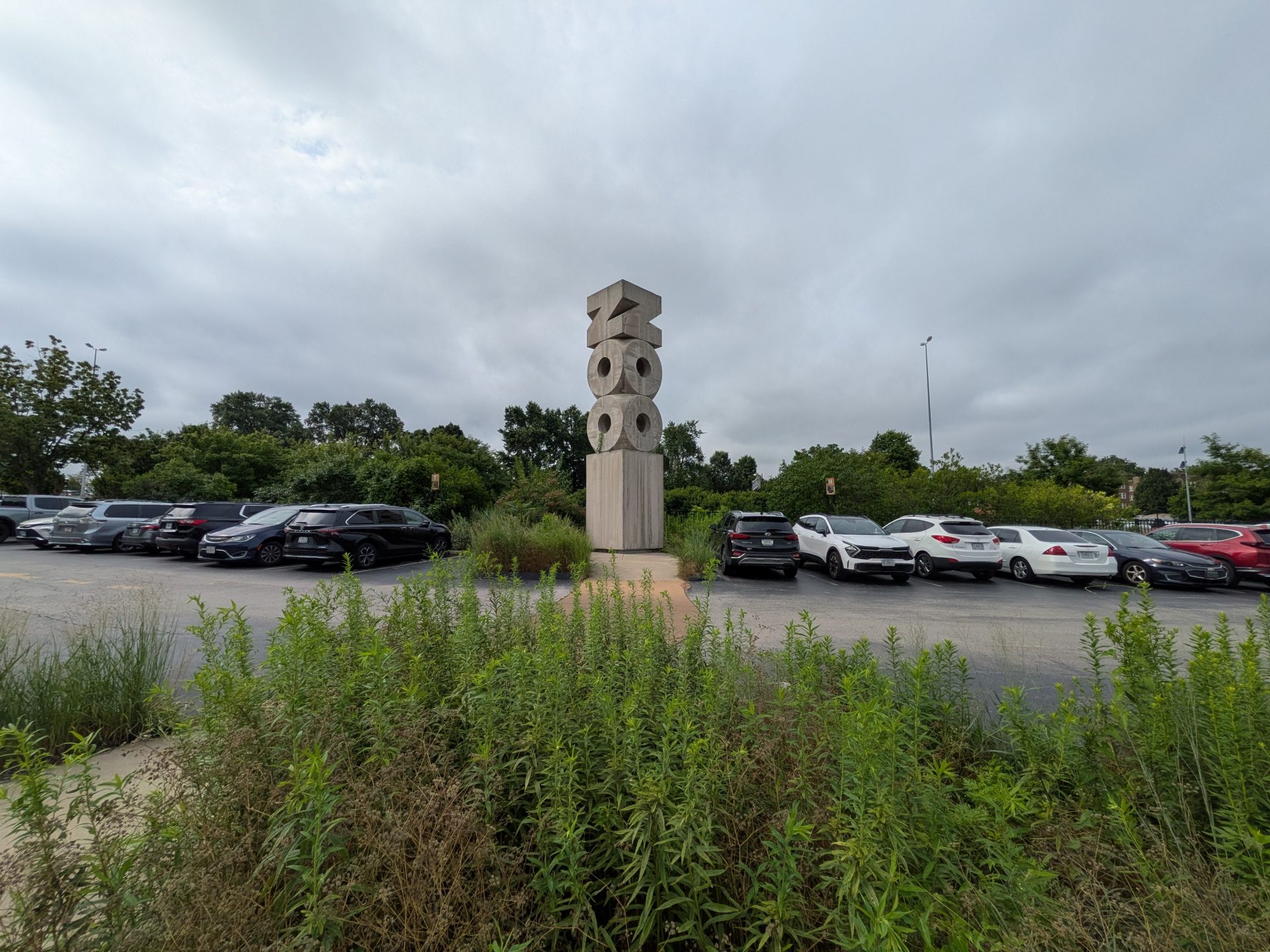
You have options for parking both on and off zoo property.
The zoo offers paid parking at two lots: the North Lot and the South Lot. Both lots are large and usually have spaces on all but the busiest days. The North Lot (Google Maps link), off of Government Drive, is smaller but usually draws less traffic. The South Lot (Google Maps link), located off of Wells Drive, is the larger of the two but also draws more cars. Parking for the general public in both lots costs $20 per car as of 2025. Zoo members can get discounted or free parking. If you have little ones in your party or anyone with mobility issues, both lots are a safe choice.
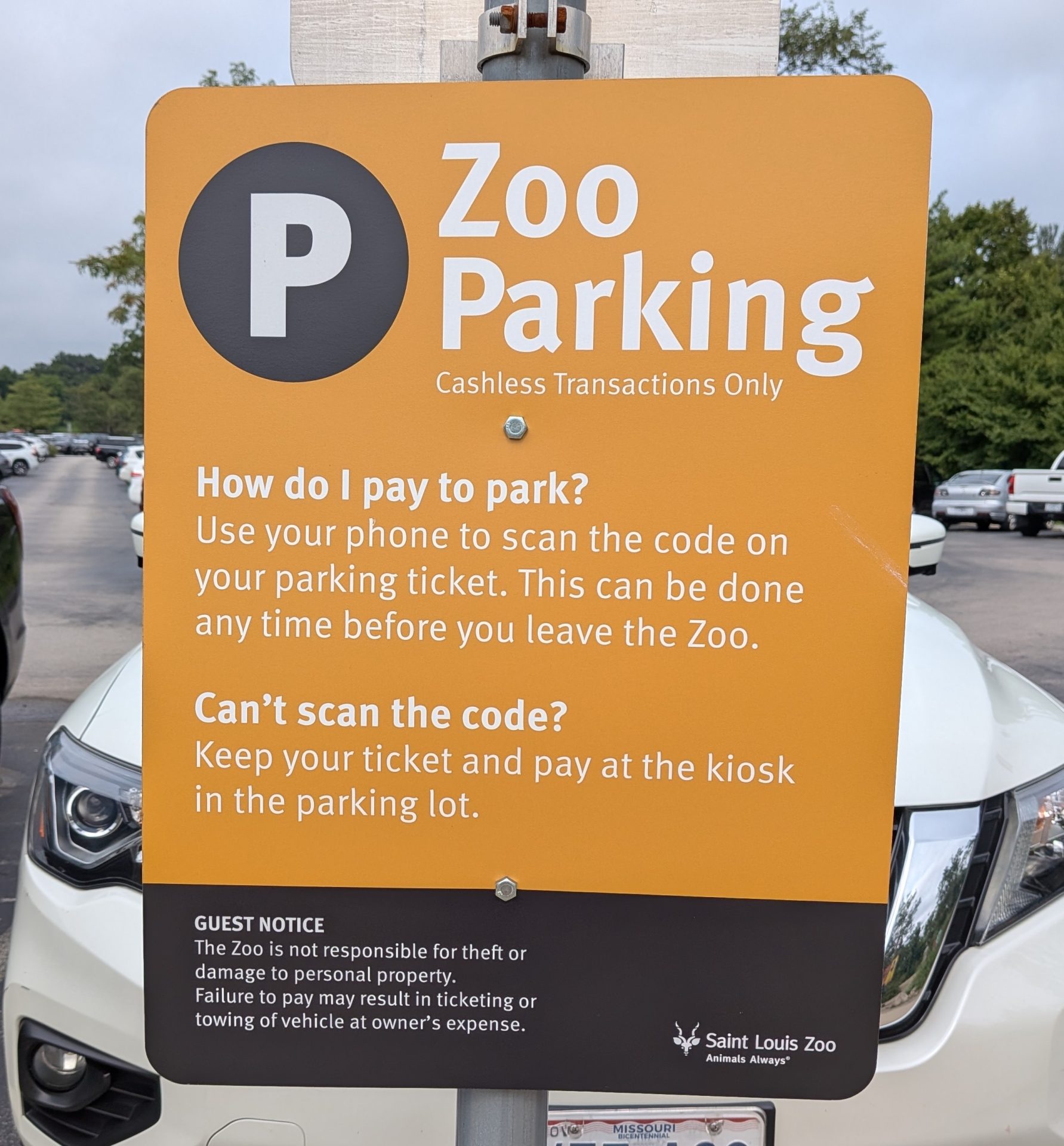
As of 2025, the Zoo has changed its lot payment system. In the past, you’d stop at a guard house and pay before entry, Now you’re given a parking ticket on entry and you can either pay using a QR code on your ticket or at a kiosk in the parking lot.
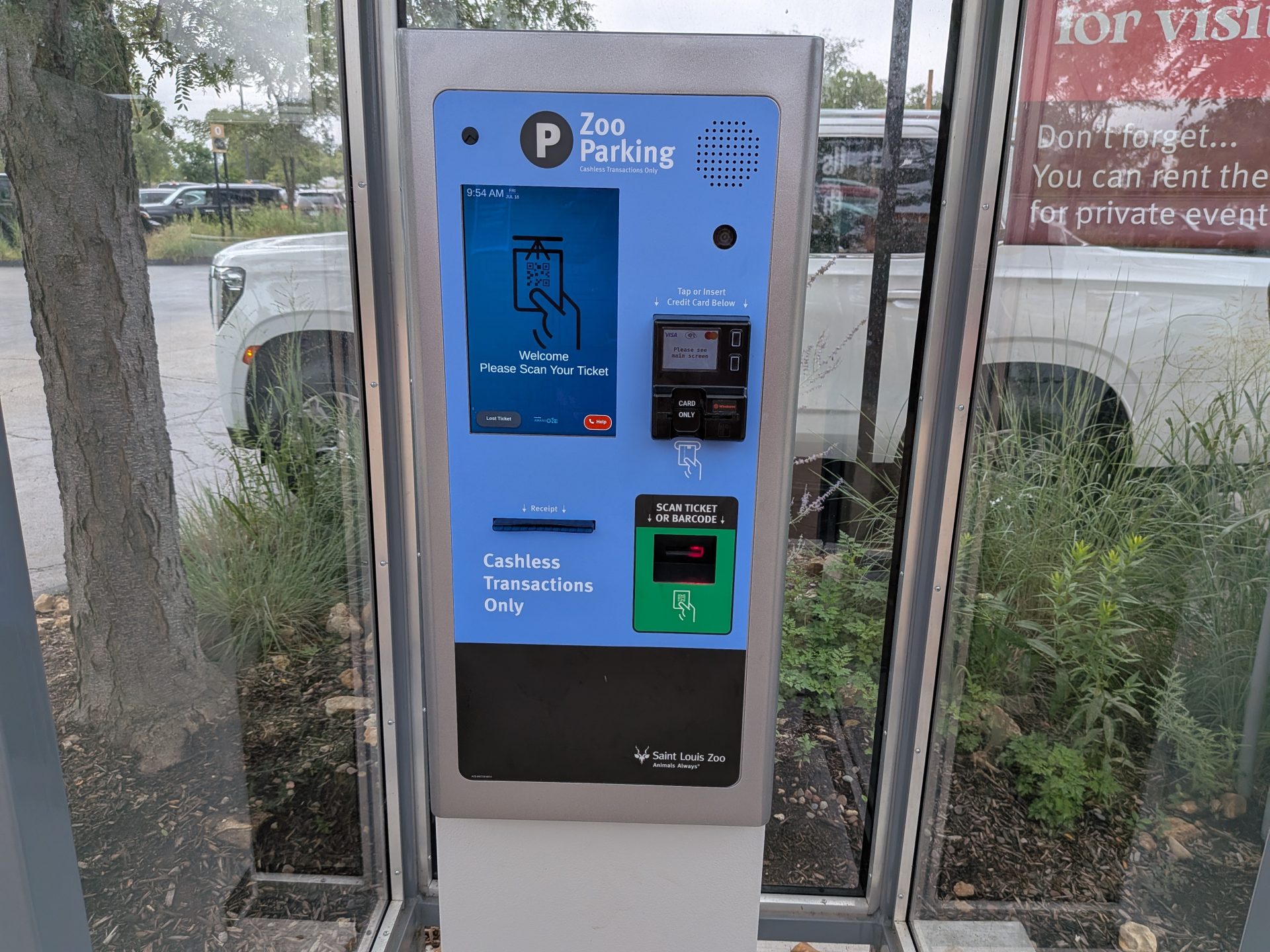
If you don’t want to pay to park, you can find free parking around the zoo. There are parallel parking spots both on Wells Drive and Government Drive. As you might expect, the closest spots fill up quickly in the morning, making it a less predictable option. In addition, those streets can get pretty crowded with zoo traffic coming and going.
Another option is the Visitor’s Center Lot (Google Maps link). This lot is farther away — it will take 15-20 minutes to cross the 0.8 miles or so from the lot to the zoo’s North entrance — but it has generous parking that rarely fills up, even on busy days. This is one of our favorite spots to park. If your party has mobility issues or needs closer parking, though, it’s not as ideal.
Costs and Considerations
Zoo hours vary season to season and possibly depending on the day of the week. Holiday hours can also vary. The park usually opens between 8 a.m. and 9 a.m. and closes sometime between 4 p.m. and 6 p.m. Summer hours will be longer than winter hours. You can find the exact schedule on the zoo’s website.
Like many attractions nowadays, visitors will need to pass through security screening, which is usually quick.
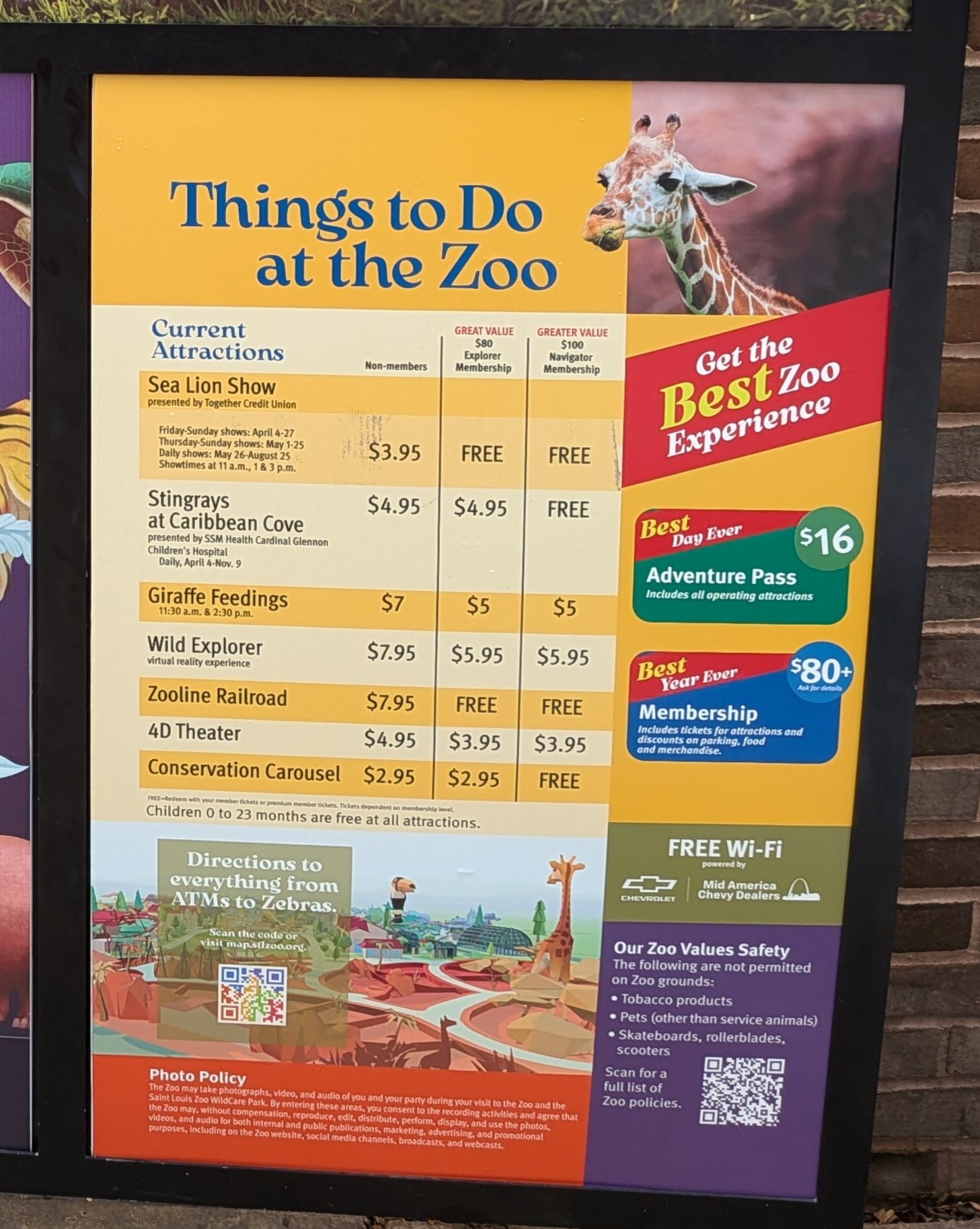
The St. Louis Zoo is free to enter and most of the attractions are likewise free. There are some paid attractions, including the 4D Theater, carousel, sea lion show, stingrays, and railroad. (There once was a time when you could do some of these for free first thing in the morning, but that is no longer the case.) You can get discounts by buying an Adventure Pass or becoming a zoo member.
Things to Do
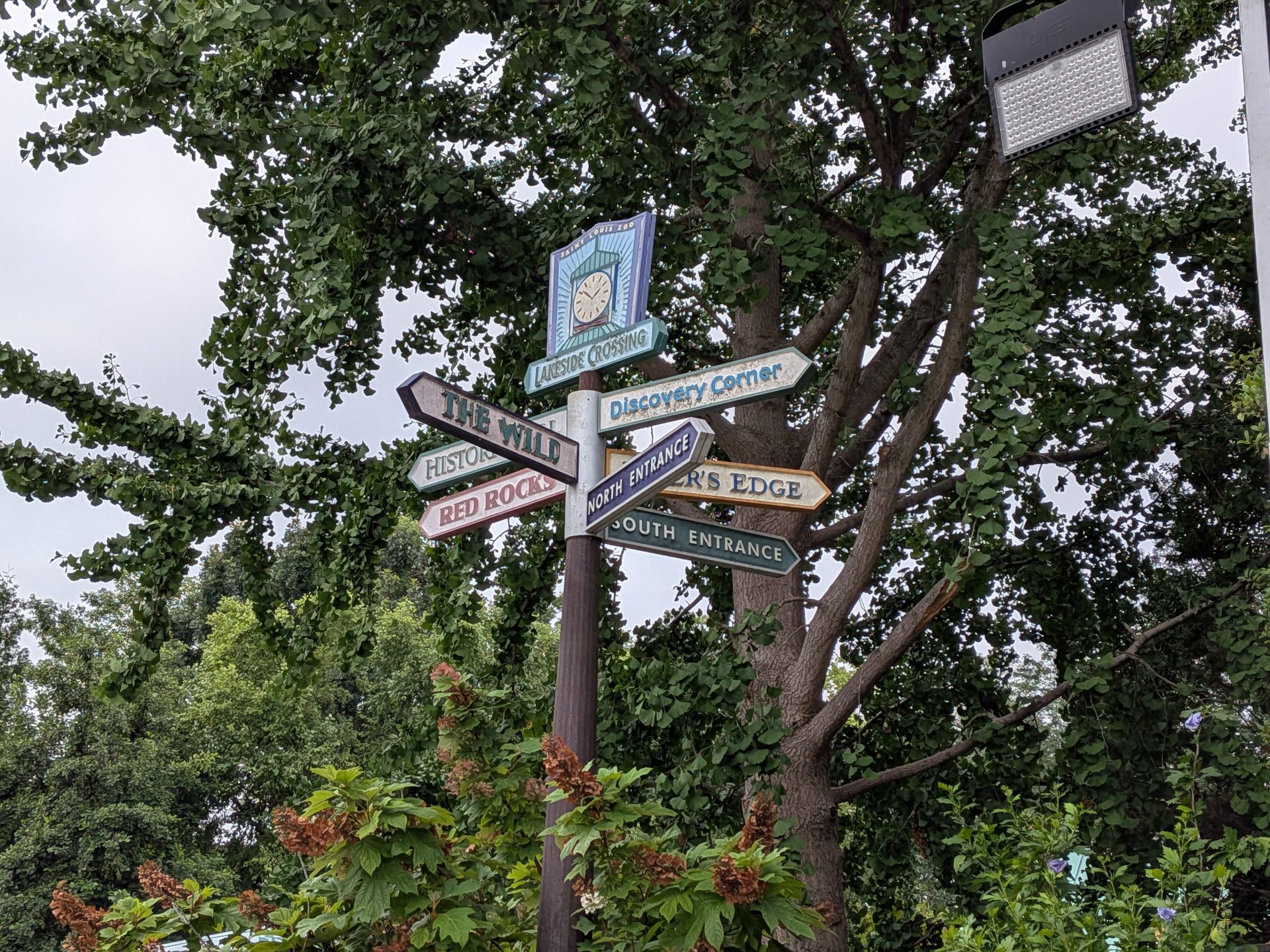
It’s not hard to make a full day of the St. Louis Zoo. The zoo showcases a wide variety of attractions, both inside and outside, all of them set across several distinct areas. Those areas include:
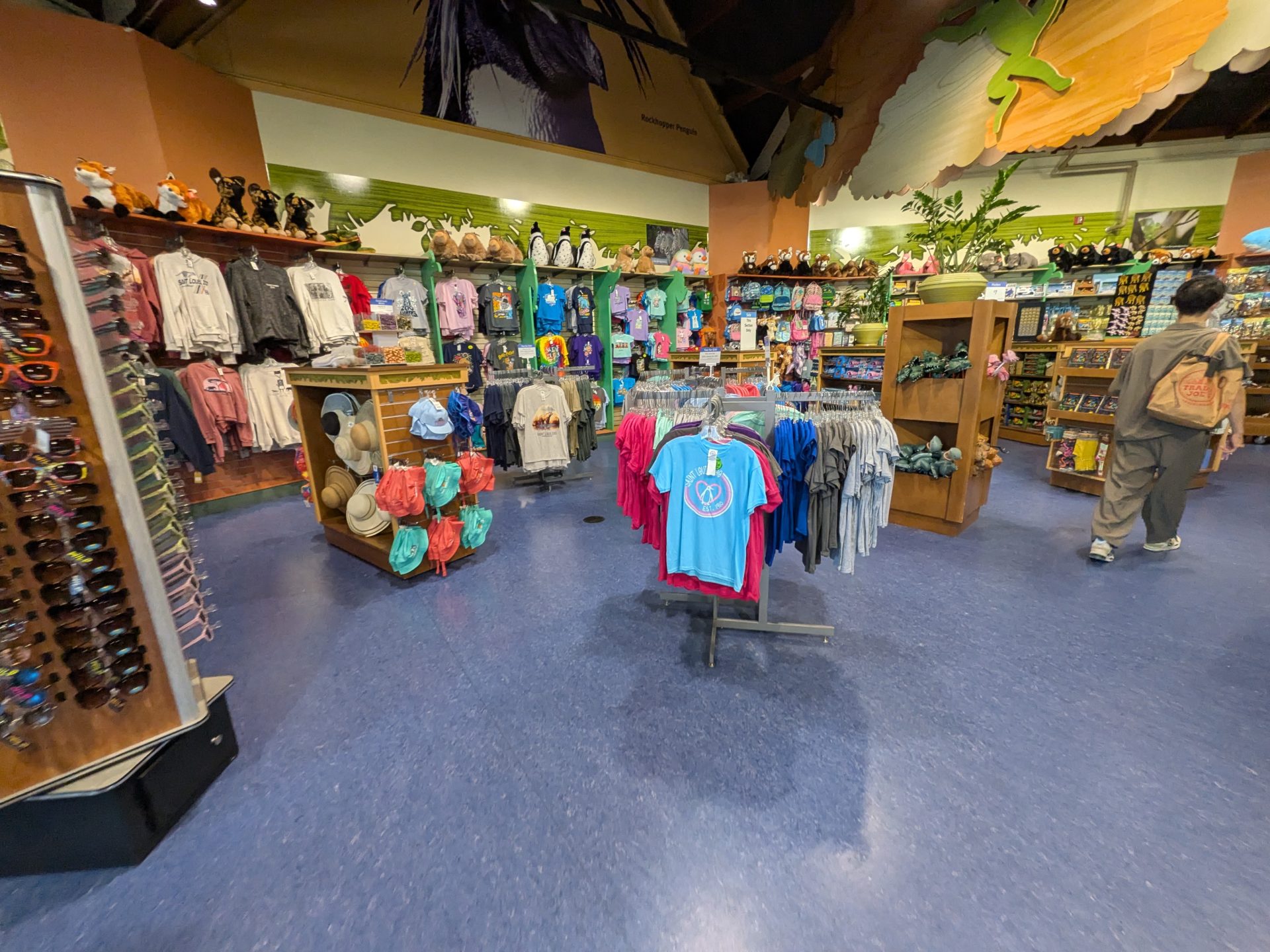
- Discovery Corner. Located just inside the north entrance, the primary attraction is The Living World, a building that includes a gift shop, dining, restrooms, a ticket counter, and a few other bells and whistles. The Insectarium, south of The Living World, is also part of Discovery Corner and features a beautiful butterfly wing.
- The Wild. Found on the north side of the park outside Discovery Corner, notable attractions include bears, an indoor penguin and puffin building, and the carousel.
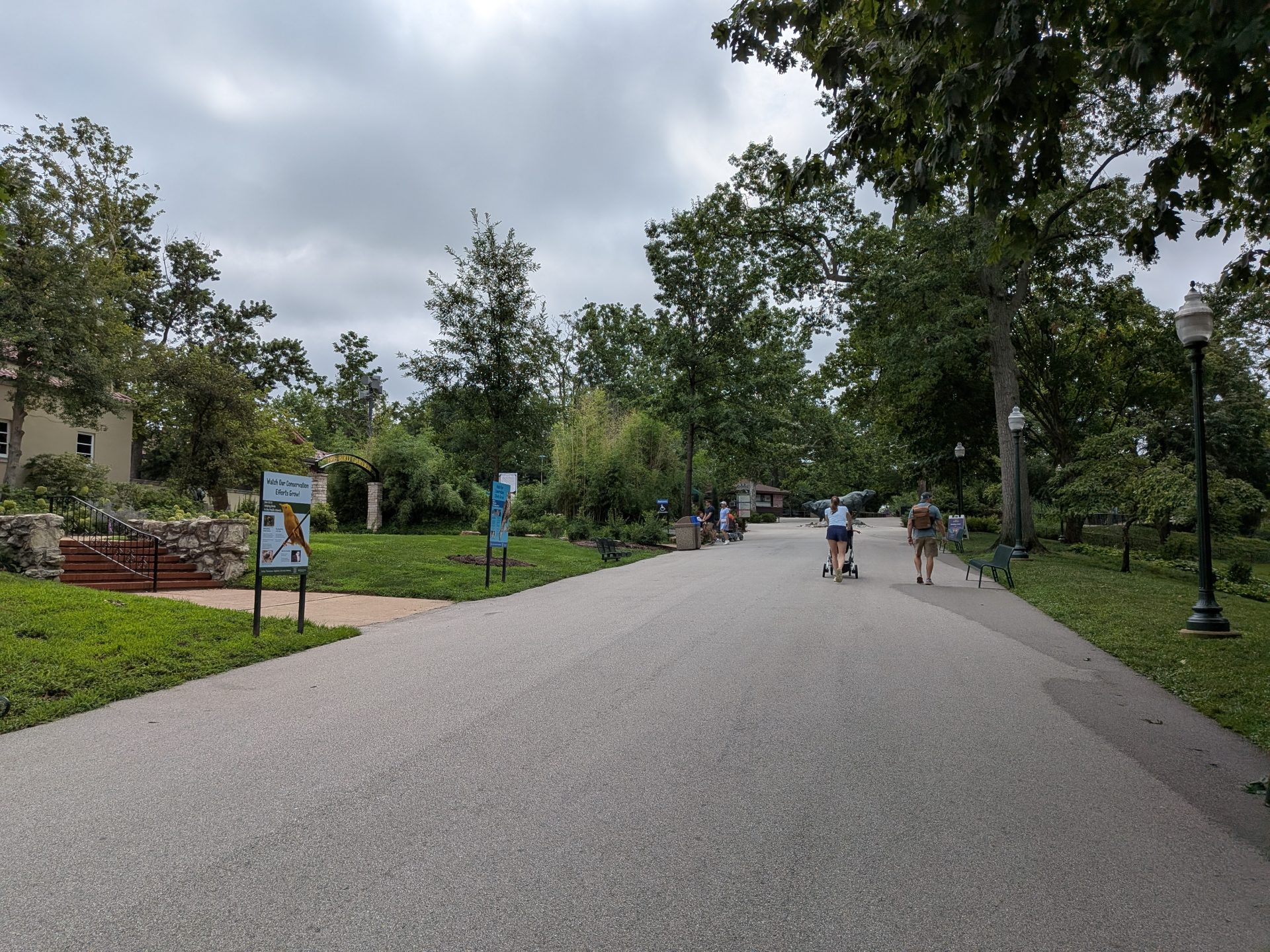
- Lakeside Crossing. Just south of Discovery Corner, this area plays host to the stingrays and sea lions. It’s also one of the major food destinations in the zoo, with Lakeside Cafe and Starbucks right next to each other. (Pro tip: if you have the Starbucks App, you can place mobile orders here.) Lakeside Crossing also includes the south entrance to the zoo.

- Historic Hill. East of The Wild, Historic Hill includes several indoor exhibits like the Herpetarium (reptiles) and the Bird House. The old 1904 World’s Fair Flight Cage can also be found here.
- Red Rocks. The eastern edge of the zoo is home to many big cats as well as giraffes and other assorted animals.
- River’s Edge. Maybe the most scenic walk in the park, River’s Edge runs along the western side of the zoo and includes hippos, rhinos, and the zoo’s ever-popular elephants.
- Destination Discovery. Located west of Discovery Corner and north of River’s Edge, this area is under development and scheduled to open in 2026. It sits on the area formerly known as the Children’s Zoo, which ran for over five decades before being closed during the 2020 pandemic. The zoo is redoing the space, which will offer all-new features. It is expected to require an admission cost.
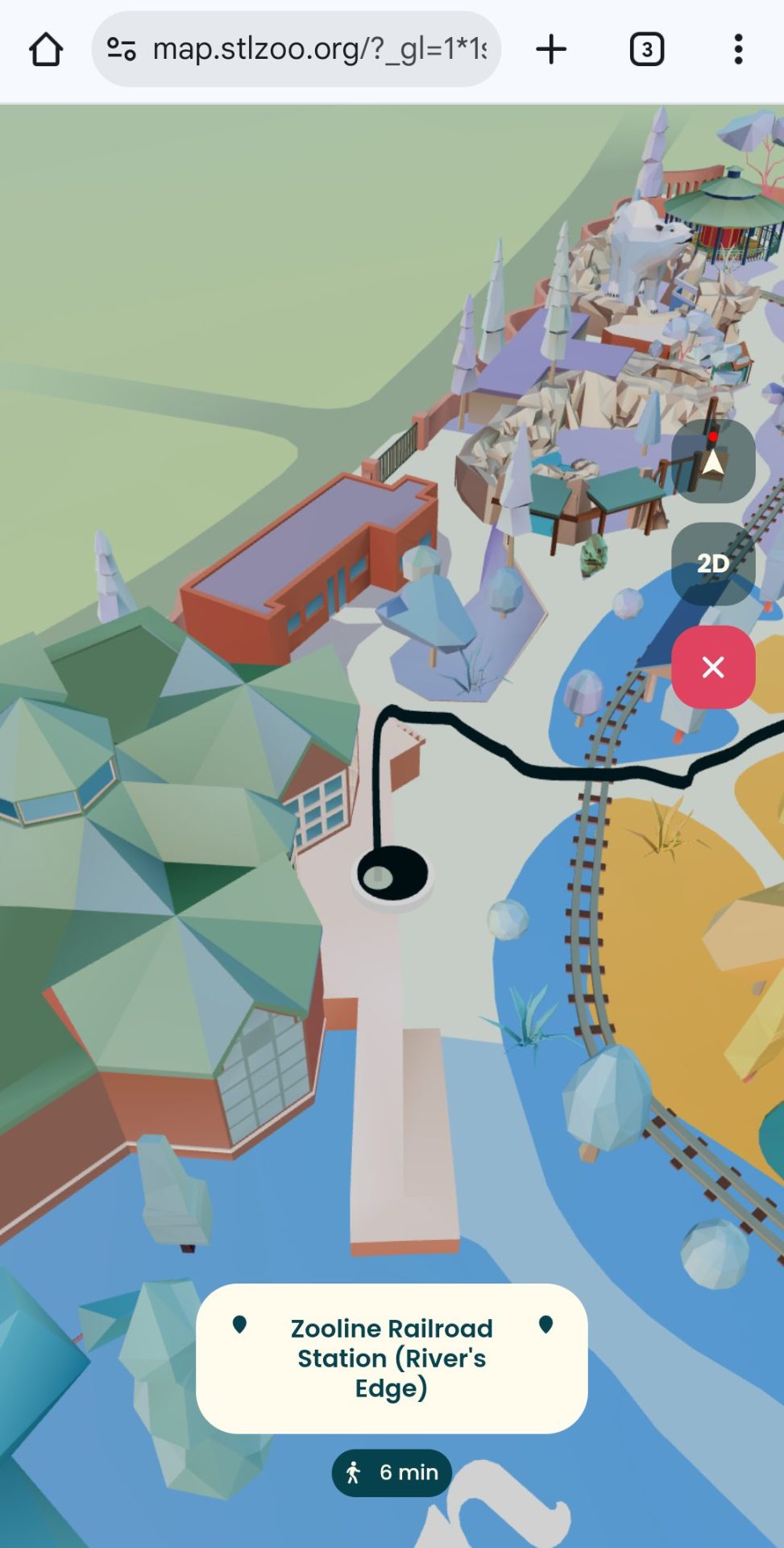
You can find an interactive map on the zoo’s website, which includes directions you can use on your phone.
Our Thoughts
We think you could make a case that the St. Louis Zoo is the very best attraction in St. Louis, thanks to its variety of exhibits and its accessibility. It’s got animals of about every type, with helpful interpretive information. The zoo is also a great place to just stroll around, especially in havens like River’s Edge, or pick up a meal or a coffee.
The best part is that it’s free to enter, with free parking near the zoo if you want that, too. The attraction does offer some cool paid experiences, though, so if you want to pet stingrays or cruise around the zoo by train, you can do that. It’s a multigenerational space that is as good for a solo walk or first date as it is for a family gathering with grandparents and grandchildren.
If you haven’t been to the St. Louis Zoo, just go. And while you’re at it, don’t forget that there’s even more in Forest Park worth seeing.