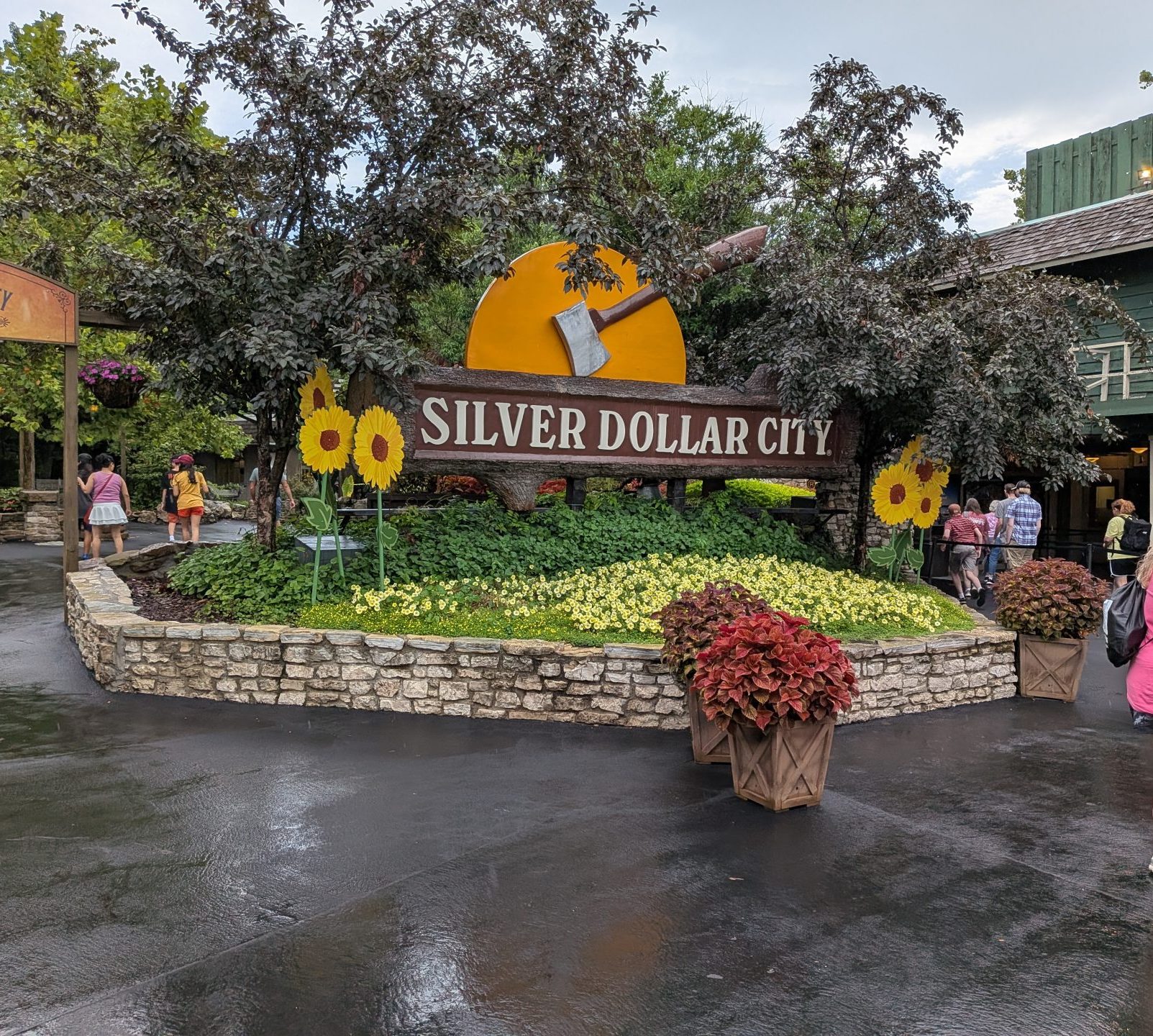
Silver Dollar City: A St. Louisan’s Guide to the Branson Theme Park
In 1889, a Canadian miner and dairyman named William Henry Lynch bought a cave and a square mile of land around it in southwest Missouri. Five years later, Lynch opened Marble Cave for public sightseeing. After he died in 1927, his daughters renamed it Marvel Cave. In 1950, a vacuum cleaner salesman named Hugo Herschend purchased a 99-year lease on the cave; after he died, his wife and sons decided creating a replica 1880s mining village around the cave would bring more tourists.
And, boy did it ever. That village grew into Silver Dollar City, which today sees some 2 million visitors annually and is regarded as one of the best theme parks in America. It’s also a popular destination for St. Louisans because of its relatively close proximity to STL. We’ve made the trip ourselves.
Getting There
Silver Dollar City (Google Maps link) is located northwest of Branson, Missouri, in the southwest part of the state. From St. Louis, it’s about 250 miles (around 4 hours). The most straightforward route from STL is to take I-44 West to U.S. 65 South, just east of Springfield, and then U.S. 65 South until you get to Branson. State Highway 76, which intersects 65, runs straight to Silver Dollar City, although depending on your itinerary you may or may not be headed directly to SDC from STL.
Keep in mind that Silver Dollar City is up in the hills. The roads are well-constructed and not too hard to navigate, but they can be curvy in spots. We find it good to be especially careful when navigating them at night and / or during poor weather.
In addition, Branson roads can get busy, especially on weekends and during certain holidays, but even on a typical weekday afternoon. It’s not as overcrowded as, say, Pigeon Forge and Gatlinburg — and it can’t hold a candle to I-270 during rush hour — but getting around town can take a little while during peak times. I’ve found it helpful to have a good knowledge of the various roads that get around town as well as where stop lights are, as left turns onto some roads are quite hard during the afternoons. The busiest time of year for both Branson and Silver Dollar City are weekends in November and December.
SDC isn’t close enough to be an easy day trip, so you’ll likely want overnight accommodations. On that front, there are seemingly a thousand places you can stay in and around Branson. On the cheapest end, you can pitch a tent on a basic site at Table Rock Lake State Park for $15-$16 a night. On the opposite end of the spectrum, you can book luxury accommodations for hundreds or even thousands a night at Big Cedar Lodge south of Branson. In between are hotels, cabins, AirBnBs and all kinds of other options. We tend to opt for a hotel in Branson, as it’s a good balance between cost and convenience, but your tastes may vary.
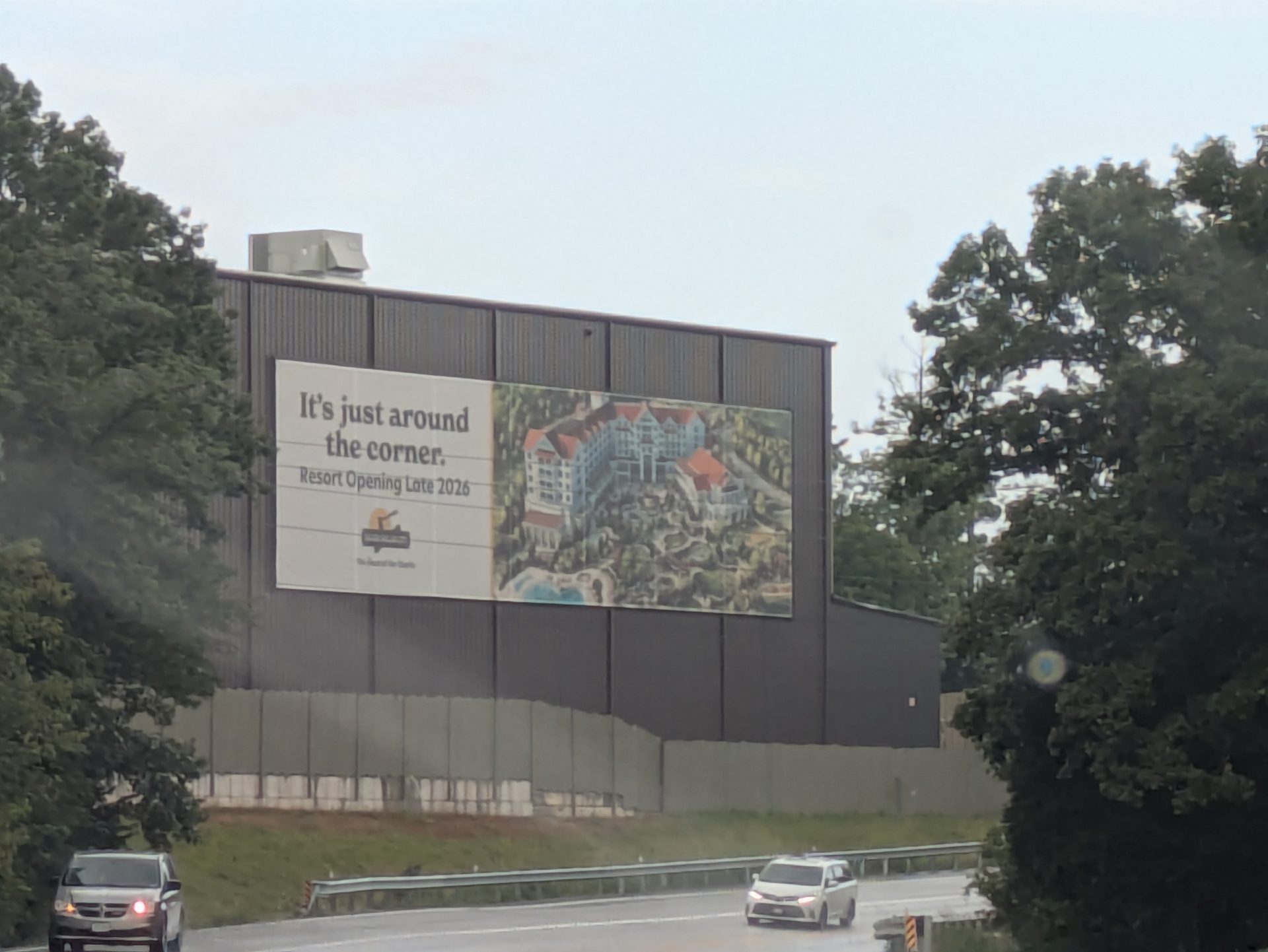
Silver Dollar City, for its part, runs a campground next to the theme park and is building a resort scheduled to open in 2026.
Parking
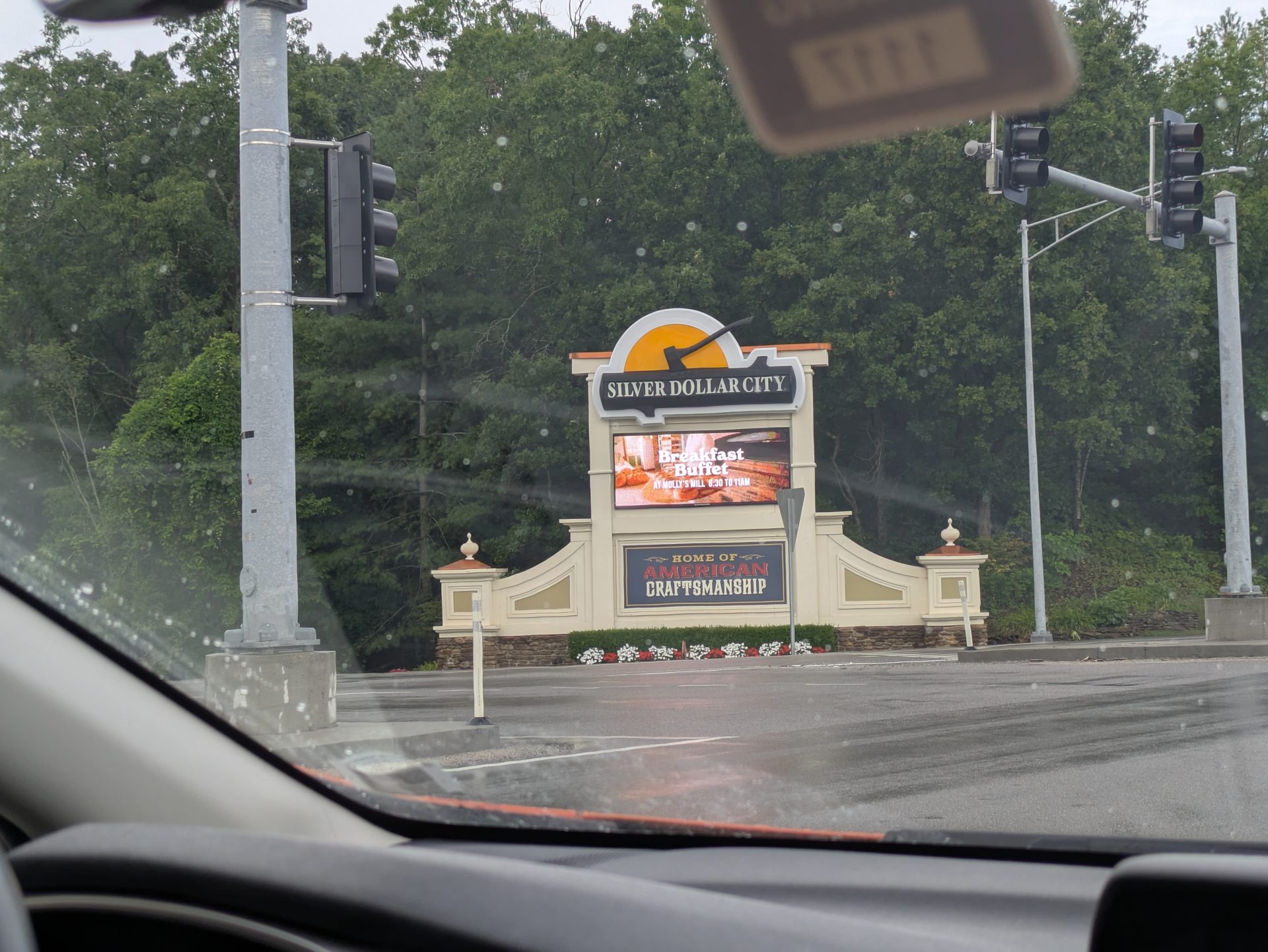
SDC operates a large collection of parking lots south of the park, and it offers shuttles to ferry people from the lots to the park. There is also a preferred parking area for cars and motorcycles that can be reserved for a fee. The parking lot can get pretty full during certain times of year, holidays especially, but there should be places to park. You can either take well-marked sidewalks from the lots to the park or can wait for shuttles. During busy times the park runs regular shuttles and buses to and from the different lots.
Costs and Considerations
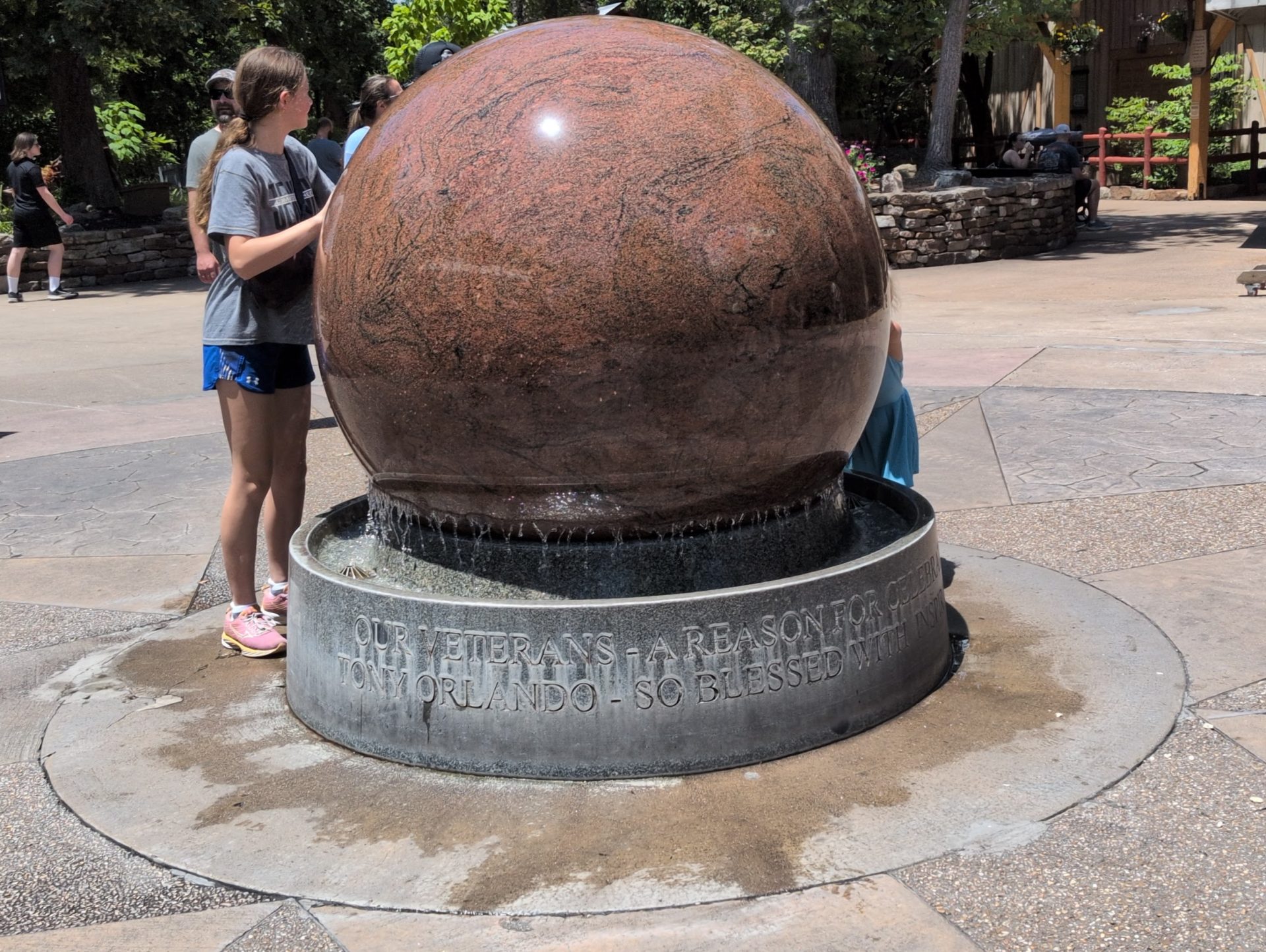
Silver Dollar City sits up in the hills, and parts of the park have slopes and rises. For that reason it can be a physically demanding park to traverse for some people. Some of the hills are even too steep for mobility scooters. Our family is no stranger to hiking, camping, and getting our 25,000 steps at Disney World, but trust us when we say that, after a long day at SDC that included trekking up and down the park, we were tired.
SDC posts a comprehensive list of helpful things to know. For example, the park does allow outside food and drink, including coolers, as long as there aren’t glass bottles or alcoholic beverages. We spotted a few water fountains and water dispensers for bottles in several places, including next to the women’s restrooms by the entrance gift shop, across from Tater Twist, next to the Boatworks Theater, and by the restrooms by the Grand Exhibit Shooting Gallery.
Two, the park does maintain an inclement weather policy, where visitors can get a complimentary ticket for a later date should their visit be shortened by weather. SDC will pause coasters, the cave, and certain other attractions if there is lightning within a few miles, even if it’s not right overhead in the park. We’ve seen this happen, even when the skies appear clear.
Like many parks, you can get day tickets or season passes. Both come in different varieties. For day tickets, as of 2025 you can get 1-day ($92), 2-day ($112) or 3-day ($122) tickets, and sometimes the park runs promos like discounted 1-day tickets, unlimited summer tickets, or even 2 days for the price of 1. For season tickets, the park currently sells tiers — silver ($175), gold ($235), and diamond ($295) — each with their own perks. Because of the pricing structure, season passes make the most sense if you’re going to visit the park more than 3 times, which may or may not be in the cards for an STL traveler.
Side note: with the exception of Diamond Season Passes, Silver Dollar City tickets do not include access to White Water, SDC’s water park, which is located six miles down the road closer to town on a separate property.
Beyond park admission, Silver Dollar City offers plenty of other paid options in-park, including food, drink (no alcohol, though), crafts, souvenirs, ride photos, and so on. You can also rent lockers in the park for $12. SDC accepts cash, credit cards, and certified or organizational checks.
One more thing: Silver Dollar City has Wifi, but we did not have a good experience getting on it and staying on it. Fortunately, we had strong cell signals for both Verizon and AT&T at the park.
Things to Do

By definition, theme parks have a lot to do. Even by those standards, Silver Dollar City keeps a wide variety of activities across its many themed sections. They include:
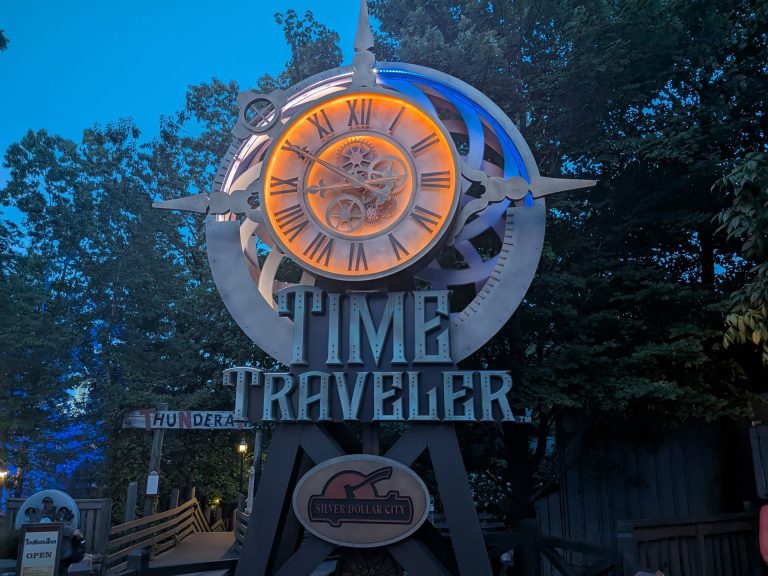
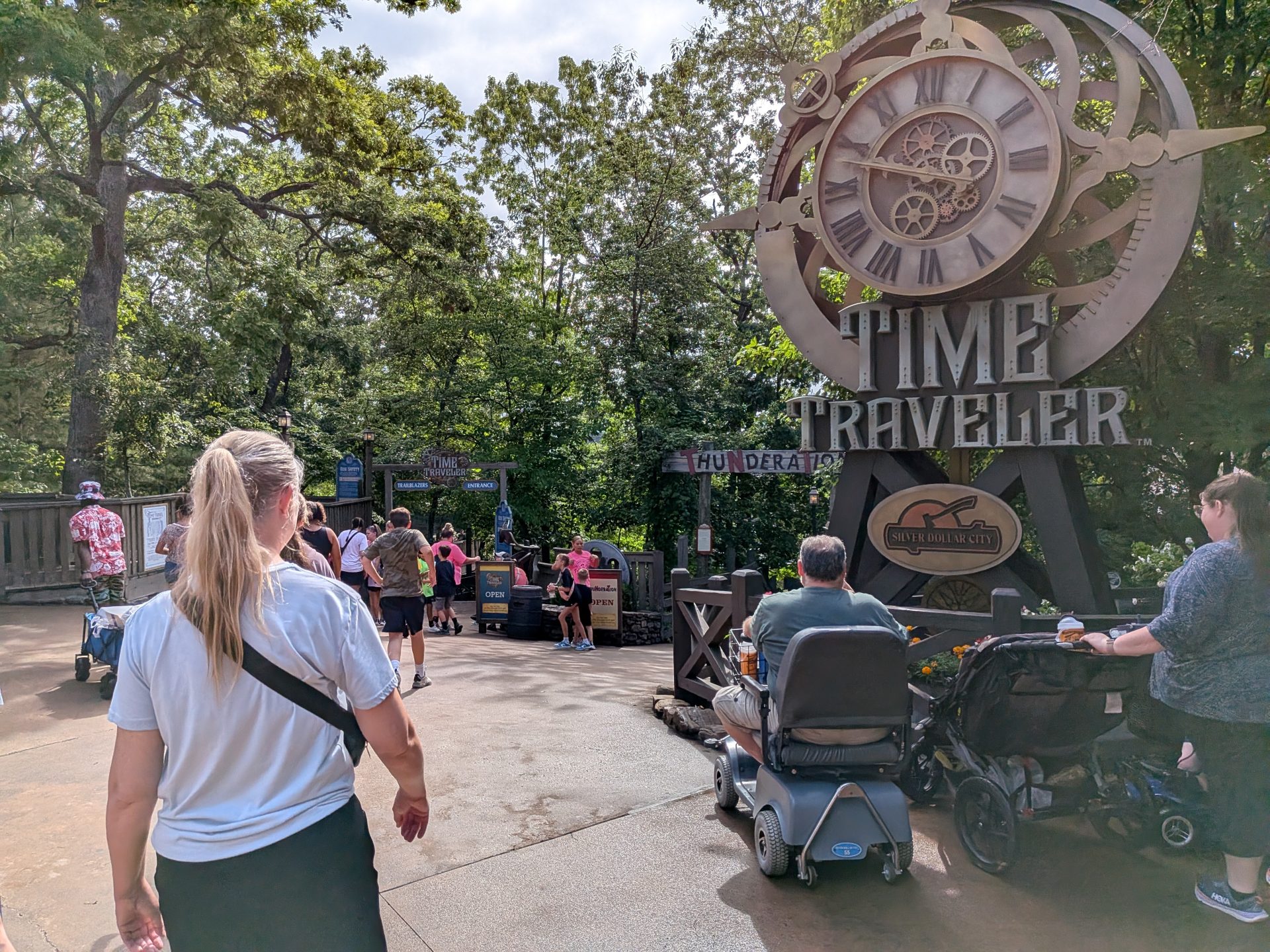
- Roller coasters. The park operates seven roller coasters, including an entry level coaster (Grand Exposition Coaster), a mine train coaster (Thunderation), a wooden coaster (Outlaw Run), two launch coasters (PowderKeg, Time Traveler), and one indoor coaster / experience (the recently revamped Fire in the Hole). Time Traveler, a launched loop coaster, took flight in 2018 and is the flagship coaster in the park.
- Other rides. You’ll find the usuals around here, including a log flume ride (American Plunge), a vertical launch (FireFall), a train that loops the park (Frisco Silver Dollar Line Steam Train), a carousel (Hugo & Mary’s Carousel), a rocking boat (Mightly Galleon), a Thunder River-style soaker (Mystic River Falls), spinning teacups (Royal Tea Party), and so on. For little ones, check out the kiddie rides tucked in the back of the Grand Exposition part of the park.
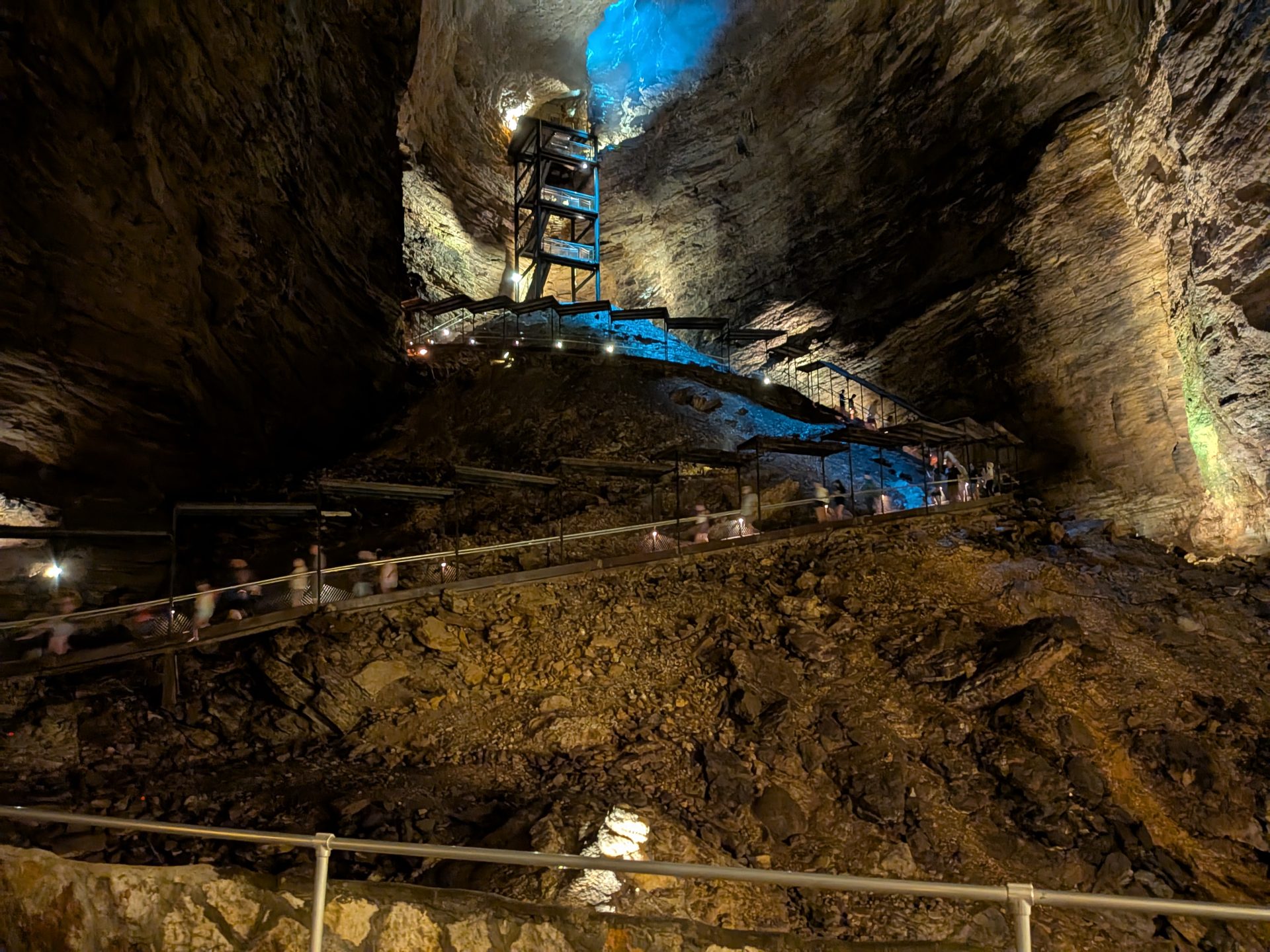
- Marvel Cave. The attraction that started it all is available for daily 60-minute tours. You can take it for free, or get a special lantern tour for a fee.
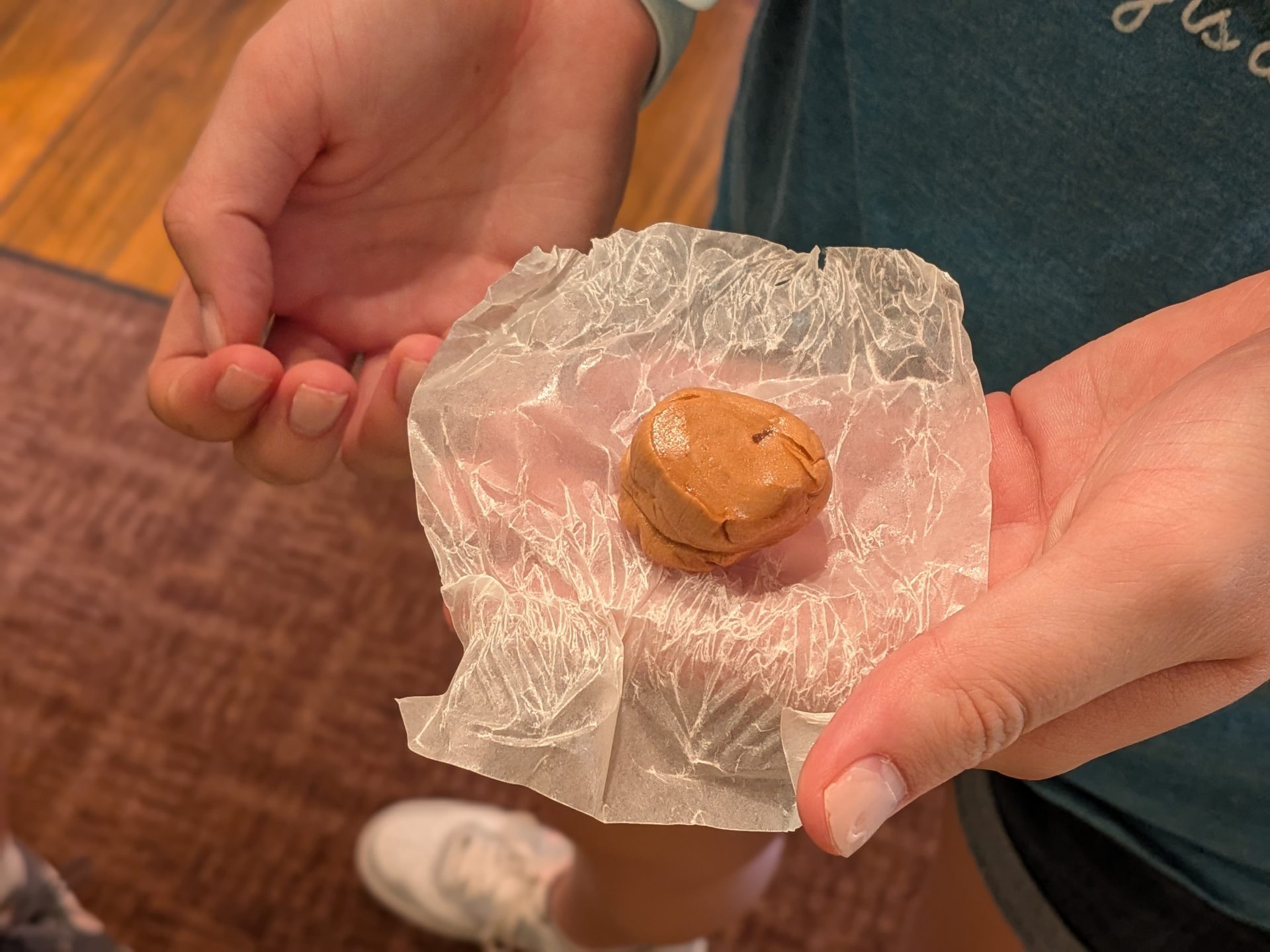
- Craftsmen and Craftswomen. Throughout the park you’ll find various people demonstrating crafts typical to the 19th century. Demonstrations may include (but are not limited to) mill workers, blacksmiths, candy and taffy makers, candle makers, glass workers, outfitters, leather makers, potters, woodcarvers, bread makers, and soap makers. Most of them have adjacent shops where you can buy their creations. Don’t forget to try a free sample of the taffy after that demonstration.
- Lucky the Rescue Dog. Yes, Silver Dollar City has a mascot. And yes, you might be able to meet him. (We, unfortunately, did not.)
- Photography. Ashley’s Tintype & Old Time Photo offers old-time photos where you and the family can dress up like it’s the 19th century. The park also offers digital photos at select places and select rides, which can be purchased a la carte or through a daily or season photo pass.
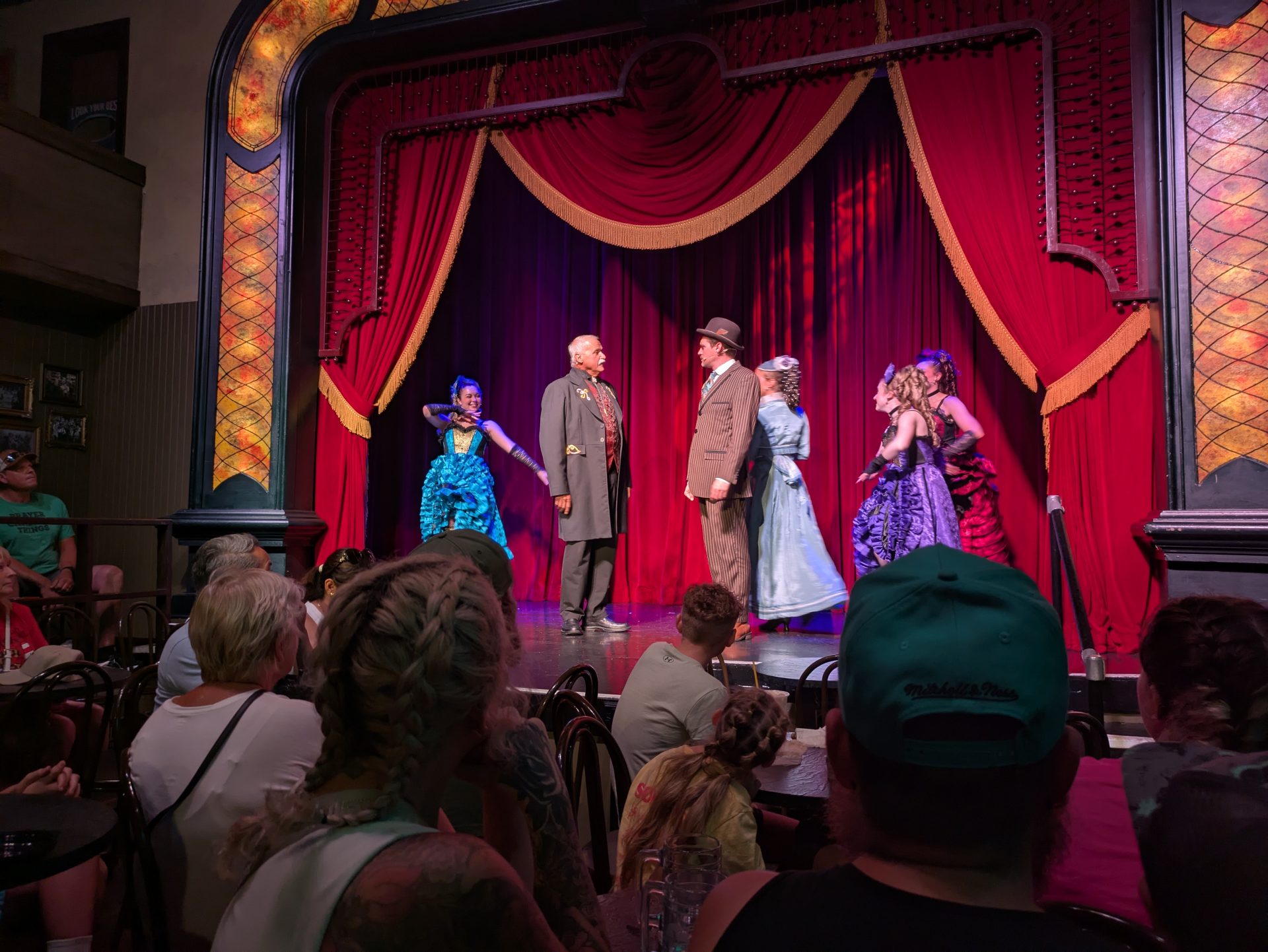
- Performers. In buildings and out in the park, performances run all day long. You might come across singers, musicians, dancers, and playactors. Most performances run about half an hour.
- Festivals. SDC runs festivals all year. Depending on the season, you might see additional performances, fireworks, lights, or other revelry.
- Dining. Silver Dollar City sells food all over the park, from snacks to drinks to full meals. The skillets are a signature favorite; you can find different kinds in different food establishments around the park.


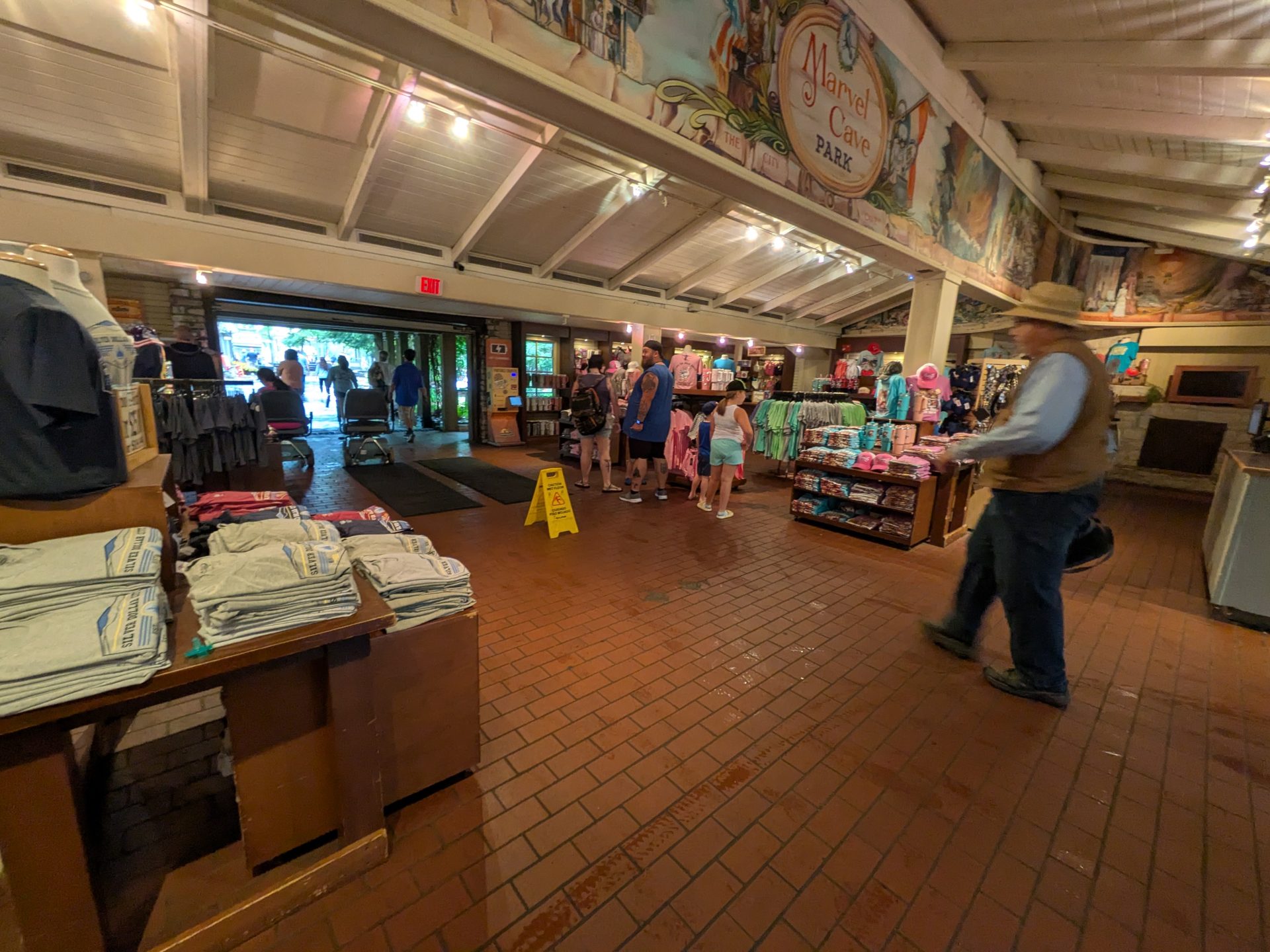
- Souvenirs. There are places to buy gifts throughout, with the biggest two being right at the park entrance and on your way out the exit.
Our Thoughts
If you’re used to Six Flags St. Louis, a theme park heavy on coasters and thrill rides, you may find Silver Dollar City to be a bit of a surprise. That’s not to say that SDC doesn’t have thrills — it operates seven coasters — but Silver Dollar City is as much about atmosphere and entertainment as it is rides. In that way, it seems to take more inspiration from, say, a Disney theme park than a Six Flags one. We think that’s intentional, as if Silver Dollar City is trying to be Disney in the state Walt left behind. You even see it in the plans the company has for “Silver Dollar City Theme Parks and Resorts.” The plurals in that phrase are intentional. That said, SDC isn’t Disney. It’s an 1880s mining town vibe with a sprinkle of steampunk.
We’ve been struck by how wide-ranging and multi-generational the experience is for visitors. There are intense coasters, chill kids rides, soaking water experiences, musical groups, comedy routines, and craft demonstrators. Some visitors just like to soak in the Ozark air, lounging in one of the rocking chairs or sitting on the outer edge of a musical group. There is a lot to do here.
The biggest challenge? It can be a physically demanding park, even if you’re in good shape. It’s set in the hills, something apparent from the moment you drive up. Everything from the parking lot to Hugo’s Hill Street will have you going up and down hills, and after a day of doing that, you’re liable to be more than a little tired. Fortunately, there are more than enough places to take a load off when you need to.
In short, SDC remains a terrific theme park in one of the most interesting places in Missouri. Our family has had fun each time we’ve visited, and we can understand why it’s a popular destination for St. Louisans and others in the region.